
Spleen CT Appearances
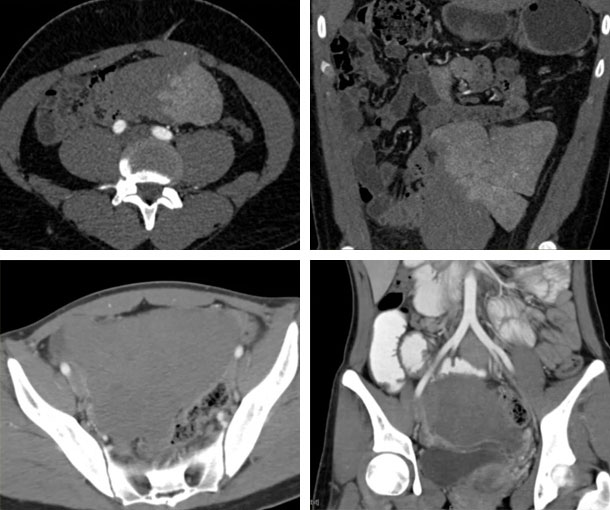
Wandering Spleen CT Findings
- Spleen migrates from normal position due to laxity of the splenic suspensory ligament
- At risk of vascular pedicle torsion and splenic infarct
- Often extends to RLQ
Other Information About Wandering Spleen
Etiology:
- Caused by weak ligaments, which can be congenital or acquired during pregnancy
Epidemiology:
- Rare
- Bimodal: presents in the 1st decade of life and between ages 20-40
- In adults, wandering spleen is more common in females
Presentation:
- Typically asymptomatic
- Abdominal distension
- Abdominal pain
- Nausea and/or vomiting
- Palpable mass
Prognosis:
- Wandering spleen is benign but can lead to fatal complications
- Splenectomy is recommended
Related Pearls: Accessory Spleen and Splenules
Related Lectures:
CT of Splenic Anomalies from Splenosis to Polysplenia: Potential Pitfalls in Diagnosis - Part 2
MDCT Evaluation of the Spleen: Challenges in Diagnosis - Part 2
MDCT Evaluation of the Spleen: Challenges in Diagnosis - Part 3